



A new round of U.S. sanctions targeting Cuba’s private sector made Washington’s endgame on the island fully visible. The White House, the State Department and Treasury have spent all of 2026 running a series of measures to encircle and thwart the Cuban government’s ability to resist Washington’s designs for Cuba. In stages, the playbook has incrementally moved on (1) key productive sectors, including metals and mining, fuel, logistics and trade, (2) the military’s supply side, and (3) persons of interest in the Cuban government or tied to it.
Now, the U.S. government is shifting its focus from diplomacy and the macroeconomy onto Cuba’s private sector itself and the microeconomy. The latest round of measures is mostly pointed at Havana’s attempts to bypass the sanctions regime through front men and private businesses, and to preempt the Cuban military-tied monopolies from disappearing into an opaque web of private businesses and public-private partnerships in the short term.
The Sherritt Playbook, Restated
This summer, Washington’s approach successfully forced Cuba’s largest foreign partners to surrender controlling stakes of their joint ventures’ (JVs) shares in the island’s mining sector. Those affected included companies like Canada’s Sherritt and Australia’s Antilles Gold, which held major concessions on Cuba’s nickel-cobalt, gold, silver, copper, and antimony assets.[1] The guidelines of this plan were first implemented during the events that led to the collapse of Sherritt’s nickel-cobalt operation in Cuba, back in May 2026.

The combined effects of E.O. 14404 and successive rounds of designations of these joint ventures froze all accounts receivables in the balance sheet of these JVs and collectability became a legal issue that only the U.S. government has the power to unlock. In turn, this situation led to severe market devaluations (or the threat of) for the international companies involved. Washington offered only one solution to its regulatory gridlock: the State Department might “not object” to U.S.-aligned firms acquiring a majority position in the foreign partner’s share in any such designated venture in Cuba. That is, Marco Rubio has veto power over how and who squeezes foreign partners of the Cuban government out of the island, on any one sector that the U.S. may have a strategic interest in.
This fall, a somewhat similar ‘playbook’ moved down Cuba’s economy a full order of magnitude, from the mining, metals, logistics and other major productive sectors of the island’s economy to the thousands of individual entrepreneur and small businesses’ accounts that make up Cuba’s private sector. On September 29, OFAC filed an amendment to the Cuban Assets Control Regulations (CACR), repealing the general license that let US banks open and maintain accounts “solely in the name of” a Cuban independent private-sector entrepreneur. The repeal is not intended as a cutoff that bans new accounts and grandfathers in previously existing ones. Instead, it operates retroactively: banks “subject to U.S. jurisdiction” now require a specific license from OFAC to “unblock” funds located in pre-existing accounts.

This new repeal transforms OFAC’s approach into a mass designation mechanism without needing to individually identify and target each entity of interest in Cuba. Thus, with one pen stroke, Washington turned sanctions—once again—into a mass surveillance instrument.[2]
Banks become OFAC’s enforcement conscripts at massive scale
With the license gone, the burden of mapping the financial web of the Cuban private sector shifts from OFAC to the banks holding a Cuban entrepreneur’s or private business’ account. This is so because any bank holding now-blocked property must report it to OFAC automatically, which the repeal now triggers for every account.
In order to comply, banks are now compelled to (1) identify who the property belongs to, and where are they domiciled, (2) surrender the account numbers and balances, and (3) describe any transaction associated with the blocking. That means naming the originators, beneficiaries, and intermediary banks, and attaching the payment instructions and invoices.

Additionally, the amendment seals specific financial loopholes. U.S. banks can no longer handle “indirect” transactions bound for companies on the State Department’s Cuba Restricted List (CRL), the businesses controlled by or working for Cuba’s military and security services, even when the bank is only a middleman. Likewise, circumventing CRL restrictions by paying a private Cuban business—which then hands the money up to one of those listed companies—is now banned outright, which strips front men and businesses of the cover they provided. Furthermore, “U-Turn” transactions (or dollar transfers between foreigners that involve Cuba) cannot clear anymore through U.S. banks on their way from one foreign bank to another.
In other words, Washington is conducting a colossal transparency operation under its preferred terms, to surveil and spot the financial flows, the persons, the assets, the services, the goods, coming to and from Cuba’s private sector.
The endgame explained
Under Trump, Washington does not take unidimensional measures when it comes to Cuba. The moves against the island always serve more than one purpose. Thus, the September measures cannot be explained through a single aim. Rather, they serve multiple goals at the same time.
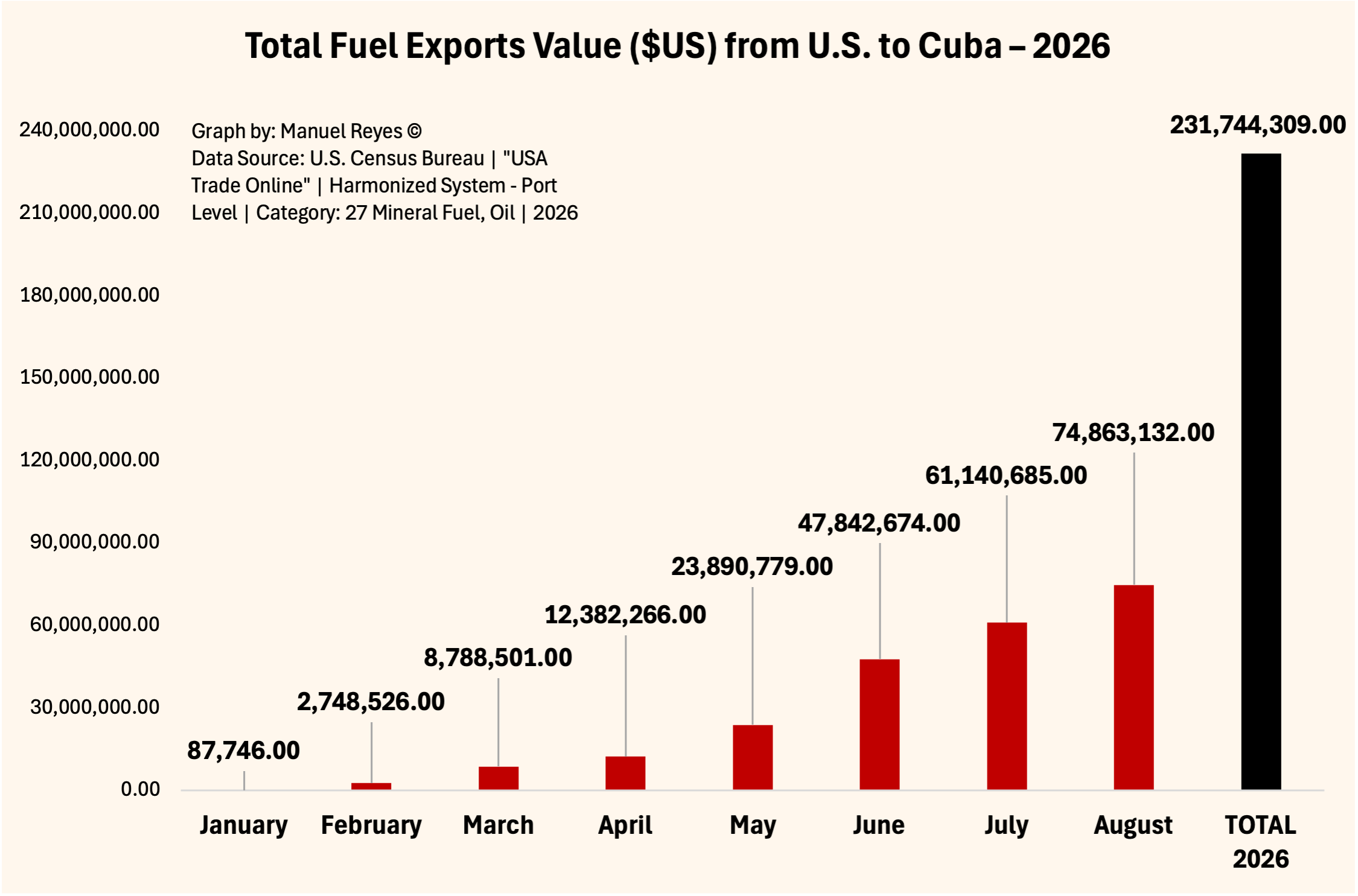
Washington is firmly in control of Cuba’s fate at the macroeconomic level, after shutting out the Cuban government from foreign investment, depriving it of its few remaining partners, curtailing the military’s ability to supply itself, and making the country dependent on the U.S. for fuel in a matter of months. The effectiveness of this strategy is no longer in question, and its results have visibly weakened Havana’s position. Hence, blocking the finances of the Cuban private sector is the next logical step in the process, bringing Washington much closer to its goal of effecting major political and economic changes on the island. Freezing, surveilling, and controlling the finances of Cuba’s opaque private sector completes a pincer move that encircles Havana from both macro and microeconomy levels.
First, Washington wants to stop the Cuban government from hiding behind its private sector. Havana’s reform package from June put the private sector forward as the vehicle for a highly-controlled opening, offering joint-stock stakes and private banking to foreign capital. The new sanctions will allow Washington to scrutinize that process at a granular level, given that a Cuban entrepreneur now needs a specific license from OFAC to hold a U.S. bank account for their business, and every bank holding a blocked one has to report it.
Second, Washington wants to flush out as many front men and companies as possible. The block on existing accounts may double as a filtering mechanism. Whoever applies to release the blocked accounts must show OFAC who owns it, which leads to the follow-up test of how the person or business is independent from the Cuban government. It is not unreasonable to think that these applications themselves may become intelligence on how businesses argue autonomy and what financial, behavioral, or asset patterns may emerge. In other words, genuine entrepreneurs will each argue their own case as best they can, but front men and front companies do not act alone; they answer to centralized decision-making nodes in Havana. Thus, the same instructions repeated across hundreds of applications can expose patterns that no single application would reveal.
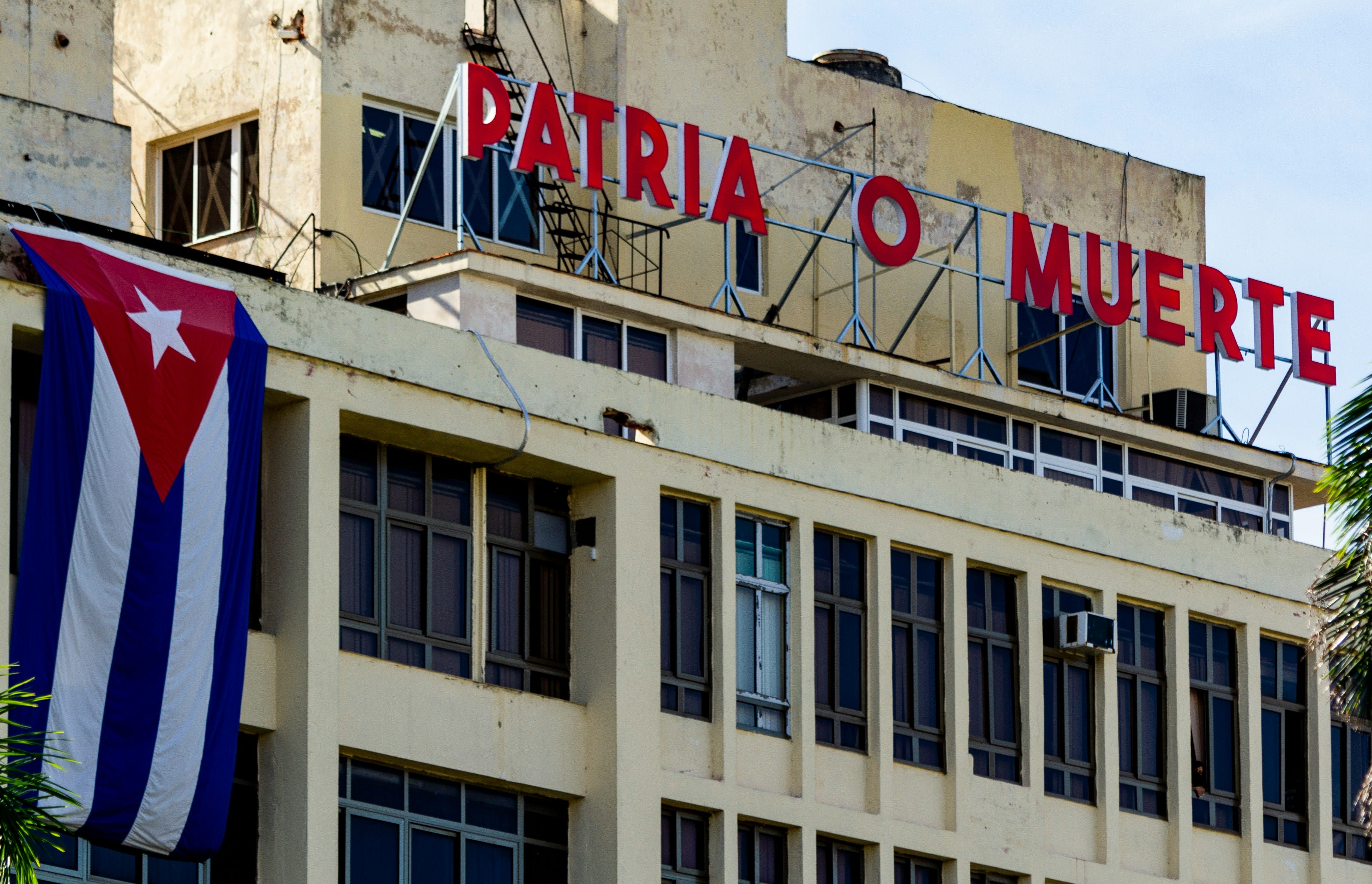
Third, Washington wants to preempt a makeover of Cuba’s sanctioned monopolies into a web of private companies. The record gives the U.S. reason to expect large businesses—especially those tied to Cuba’s military—to reappear in smaller, private pieces, shelled out of their former public structure.[3] The CRL covers only companies it names, so a conglomerate broken into hundreds of small, unlisted firms could slip past it in theory. However, the anti-evasion clause in the new measures closes that route. This rule was written to prevent a business empire restructuring that has not happened yet: however many pieces the conglomerates break into, its money still has to arrive somewhere, and all arrival points are now surveilled.
Fourth, Washington wants to disarm Cuba without fighting, if it can. Designations under E.O. 14404 moved from the armed forces ministry in June to its production companies in August and its research and design institutes in September, while mining, steel, fuel imports, and port logistics were targeted in parallel. Washington’s aim appears to be a Cuban military that cannot supply itself. Yet, Washington has been explicit that its preference is for a deal and that it does not want a war. However, if conflict does come, Washington would not want another Iran, where a committed leadership has held a belligerent posture for months. Thus, starving the Cuban military of money, materiel, and services now would shorten how long it could resist later, should a deal prove impossible.
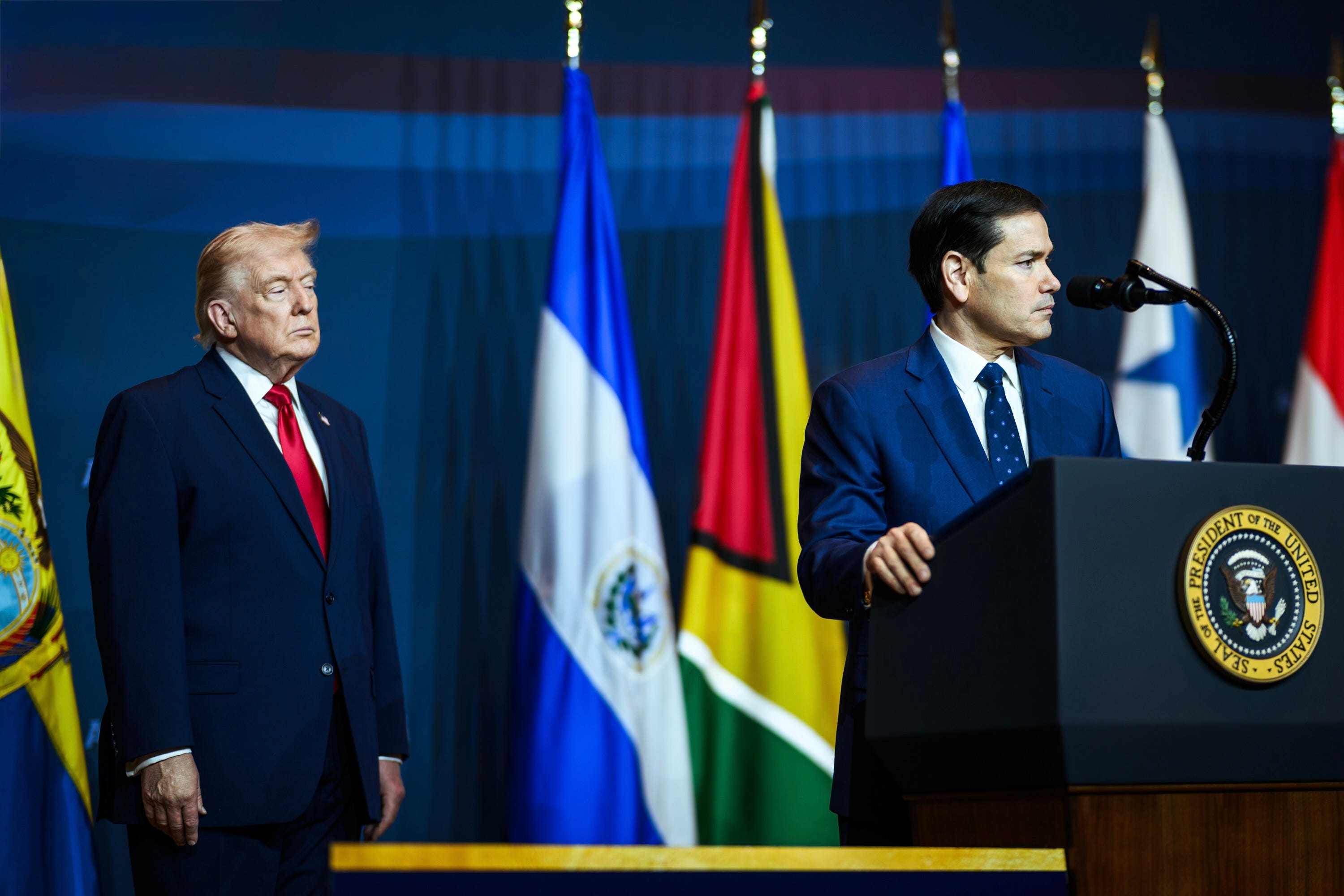

This time, Havana has no recourse and no visible strategy in place. For decades, the Cuban government survived U.S. sanctions by finding different channels that Washington had not yet closed. Before September, one of the last significant channels left was the financial conduits of the private sector. With that pathway now also under OFAC’s watch, there is barely anything left to reroute money through. If a government cannot move hard currency, earn revenue, or hide it from its adversaries, it will not be able to keep the lights on, feed its people, or keep its military victualled and geared for long.
It is unreasonable for Cuba’s leadership to ask Cubans to wait out the Trump administration for the sake of its own political survival. With a 15% GDP contraction from 2018 levels and a multi-year exodus that has seen over 1,200,000 Cubans leave, the country is in no condition to endure more years of shortages, blackouts, disease, and lack of public services until Trump’s term ends in January 2029. Washington, for its part, seems unfazed by the hardships suffered by ordinary Cubans, nor has it shown any sign of easing its pressure on the island on humanitarian grounds. Even if Cuba were to hold out that long, nothing guarantees that the next administration—Republican or Democrat—would change course. Pretending otherwise will only lead to societal collapse.
Status: U.S. Sanctions Enforcement and Control Mechanisms — Level 3: Execution Phase.
Status: Cuba’s Reforms Implementation Process — Level 2: Constrained execution.
Status: Cuban Government’s Response Capacity to U.S. Policies — Level 1: Pre-policy.
This brief applies the ST Monitor proprietary classification to interpret specific developments based on their phase of execution, and the above content should be read through that lens. Some plans remain at the level of (1)political signaling without an operational framework; others are (2)constrained within permission-based systems; and others are (3) fully operational and institutionalized:
Level 1 — Pre-policy (no executable framework exists)
Level 2 — Constrained execution (activity exists but is permission-bound)
Level 3 — Execution Phase (system is operational and institutionalized)
REFERENCES LIST
[1] Major commodity trader Trafigura has also been affected by U.S. designations of partners on its Cuban zinc operation in Minas de Matahambre, Pinar del Río, in western Cuba. However, it is not clear from public records that Trafigura has been forced (yet) into the same arrangement as Sherritt or Antilles Gold to salvage its interest on the island, nor it is clear either that this is the company’s goal at present.
[2] See generally Fishman E., Chokepoints: American Power in the Age of Economic Warfare (2025). Portfolio, ISBN: 9780593712979 (discussing how U.S. officials used control over dollar finance and critical technology to impose sanctions on Iran, Russia, and China); Henry Farrell & Abraham L. Newman, Weaponized Interdependence: How Global Economic Networks Shape State Coercion, International Security, vol. 44 no. 1, 2019, p. 42-79. Project MUSE (2019) (arguing that governments with jurisdiction over the central nodes of global economic networks can use a “panopticon effect” to gather strategically valuable information and a “chokepoint effect” to deny adversaries access, tested against SWIFT and the internet).
[3] Instances of sanctions-evasion attempts by the Cuban government abound. For example, after Treasury sanctioned Fincimex in 2020, remittances processing moved to Orbit S.A., a company presented as independent but that is thought to be run by the Cuban government. After OFAC designated AUSA in June 2026, operations at the Mariel container terminal passed to Coral Marítima, designated a month later. Other private companies such as Agencia Importadora Caribe SURL have also been identified over the years as non-independent from the Cuban government.
See The Southern Trade on Google
Want The Southern Trade analysis at the top of your feed? You can tell Google to prioritize this source by clicking on the button below.

© 2026 Manuel Reyes, The Southern Trade Group™. All rights reserved. Content may not be reproduced without permission.
Legal and Investment Disclaimer
This brief is provided for informational and educational purposes only. Although it discusses legal frameworks, regulatory structures, and investment-related considerations, it does not constitute legal advice, tax advice, financial advice, or investment advice of any kind.
Nothing in this article is intended to create, and receipt of it does not constitute, an attorney-client relationship, advisory relationship, or any other form of professional engagement between the author and the reader. The content reflects a general overview and may not address specific facts, circumstances, or applicable laws relevant to any particular situation.
Readers should not act or refrain from acting based on any information contained herein without seeking independent advice from qualified legal, tax, and financial professionals licensed in the relevant jurisdictions.
This document does not constitute an offer to sell, a solicitation of an offer to buy, or a recommendation to purchase, sell, or otherwise trade any securities, financial instruments, or assets. Any references to investment structures, jurisdictions, or regulatory regimes are illustrative only and should not be interpreted as endorsements or recommendations.
The author makes no representations or warranties, express or implied, regarding the accuracy, completeness, or timeliness of the information contained herein. Laws, regulations, and policies may change, and their application can vary widely based on specific circumstances.
To the fullest extent permitted by law, the author disclaim any liability for any loss or damage arising directly or indirectly from reliance on this document or its contents.