


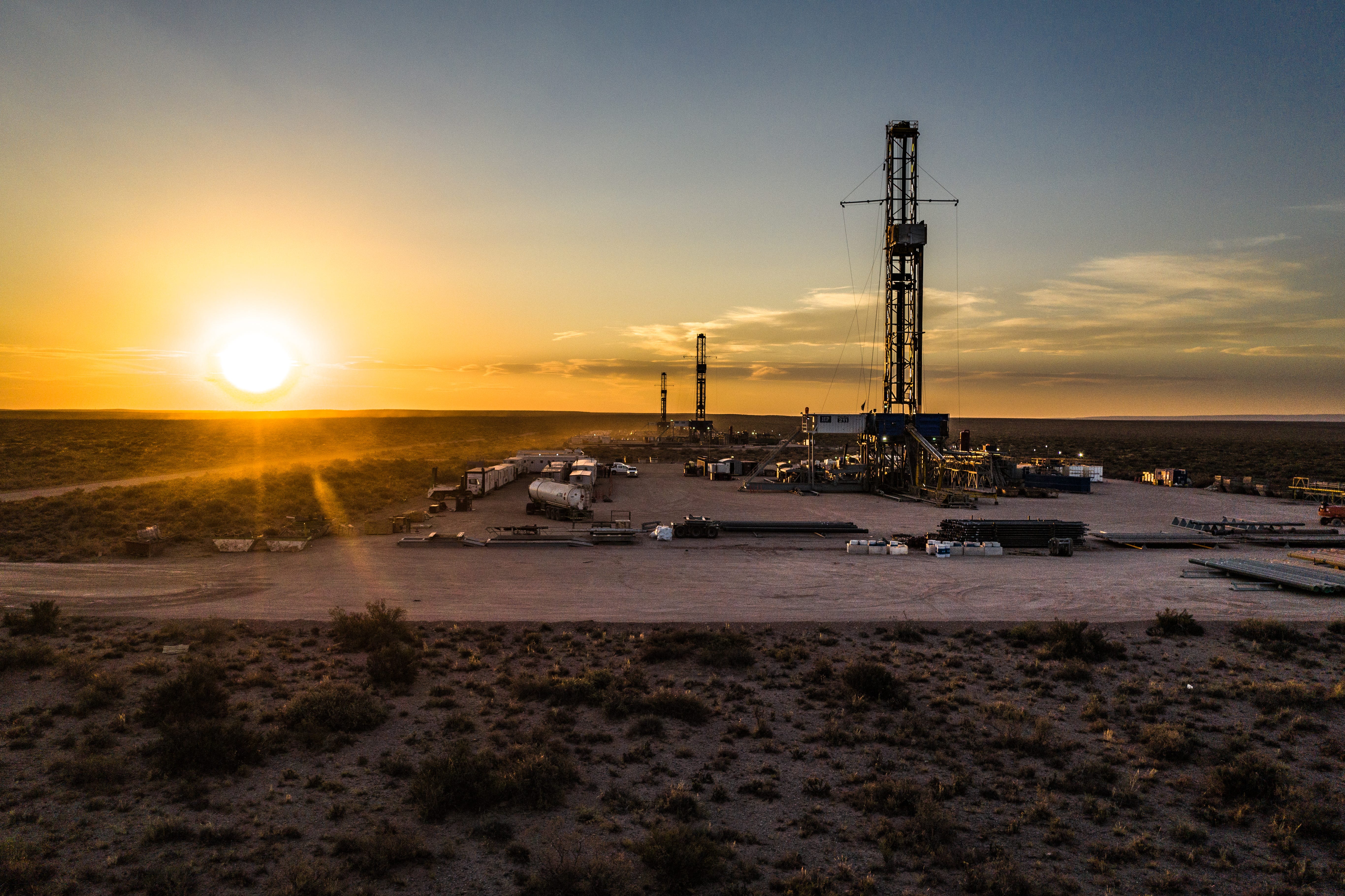
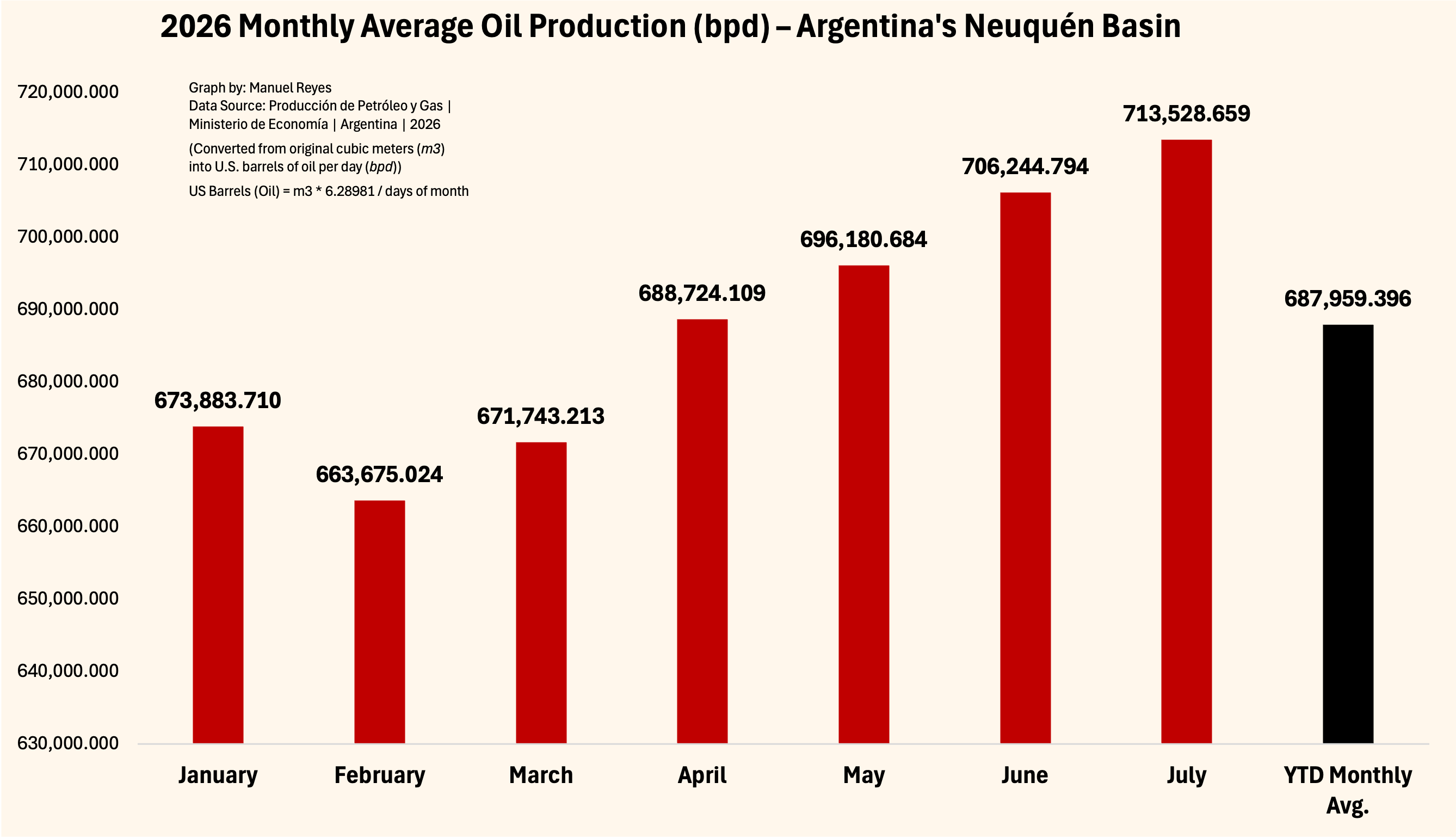
Argentina’s oil production is targeting one million barrels a day (bpd), driven by its shale boom in the Neuquén basin.[1] The official figures in 2026 point to a monthly average of 687,959.396 bpd and growing. Last March, President Milei asserted in Congress that Argentina’s energy complex will be exporting “about $50 billion” worth of energy in “five years.” However, that growth may not be sustainable in the medium and long term unless a number of upstream and midstream challenges are overcome. The most overlooked issue, yet central to Argentina’s shale-oil growth, is the legal status of the fracking sand used for the wells.[2]
Since 2021, several private actors are conducting a three-track litigation process against the sand-extraction sector and the local government of Entre Ríos, the Argentinian province supplying premium-quality sand to Neuquén. This lawfare campaign has already produced concrete outcomes, including (1) a provincial ban from authorizing new sand quarries or wash plants since May 2022 pending a “cumulative environmental impact study,” (2) an injunction relief ordering the provincial Governor to audit all permits for the sand quarries and wash plants, and (3) an order to study the impact of the wash plants on the hydrogeological resources of the province.
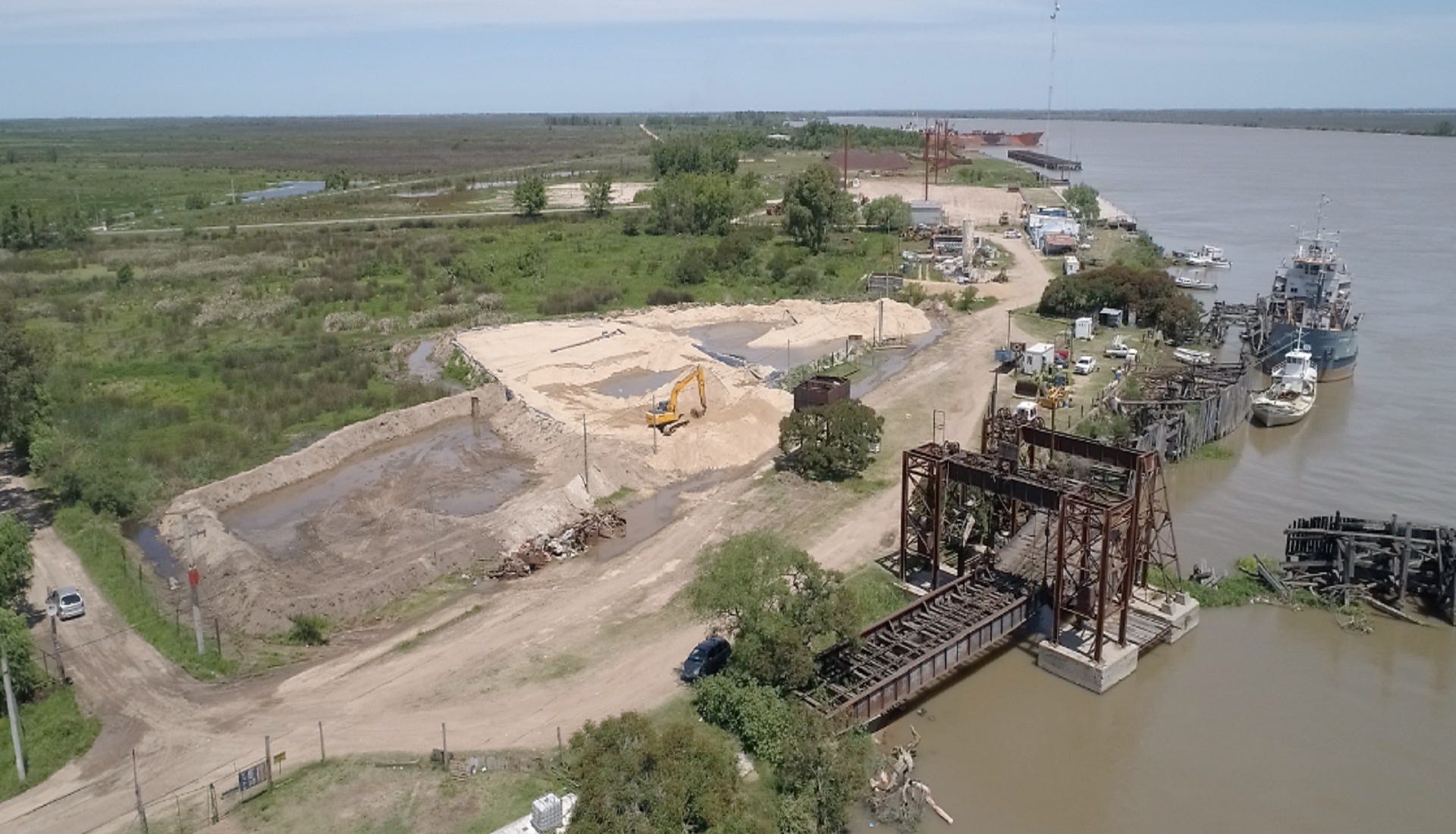
The combined fallout from these lawsuits has also produced criminal charges against several local officials over non-compliance with the judgements. Importantly, this situation may lead to supply disruptions to an ever-growing shale-oil operation in the Neuquén Basin, as Argentina seeks to scale up its energy production and turn the country into a petrochemical juggernaut. Whether the volumes of sand extracted (legally) can keep up with demand from Vaca Muerta seems to be an afterthought, thus creating an industry blind spot from a logistics, financial, legal, environmental, and even reputational standpoint.
Why Neuquén’s Shale Oil Needs Sand from Entre Ríos
Silica sand is a propping agent (proppant) and plays a key function in the process of hydraulic fracturing (fracking).[3] After water pressure fractures the shale rock holding oil and gas in a well, sand props up and keeps the fractures open once the pumping pressure of the water is released, which in turn allows the oil and gas to flow out of the well. In other words, sand is to fracking what support columns are to the structure of a building. Do away with the “pillars” holding the shale apart and cavities collapse, trapping the hydrocarbons back in the rock.
Specifically, Entre Ríos’ sand quality is the highest available at cost for the Vaca Muerta play. The sand types available in the broader Río Negro province—where the Neuquén basin sits—are not optimal in terms of oil recovery percentages. The cheap, relatively close-by Río Negro sand generates a 20% loss in the oil recovery process at the well, compared to extraction that uses solely premium-quality sand from Entre Ríos.[4] The difference resides in several factors like quartz content in the grain, shape, resistance to breaking under pressure and to other chemical agents in the solution injected into the well.[5] As a shale formation, Vaca Muerta’s oil recovery factor (RF) mean is only 8% of all original oil in place (OOIP), as opposed to conventional oil production, where RF can easily rise to 30-35%. Thus, efficiency is paramount.
Consequently, demand for the specific sand guaranteeing that a fifth of the oil recovery process does not go to waste is only projected to increase. In September 2025, the Argentinian Institute for Petroleum and Gas (IAPG) estimated that a 50-stage fracture well would require 232 tons of sand per stage, or 11,600.00 tons total. This is equivalent to needing 580 semitrucks carrying 20 ton truckloads to service one well.
Argentinian Law, the Litigation Timeline and its Legal Effects on the Sand Trade
Sand is a third-category mineral under Argentina’s Mining Code. The resource belongs to the surface owner, with no separate central or local government concession.[6] Under Argentina’s federal constitution, provinces control their own natural resources, over which Buenos Aires has limited jurisdiction. This is why all litigation involving the sand trade in Entre Ríos has taken place through their own provincial courts almost exclusively, with neither federal authorities nor national law superseding local courts.
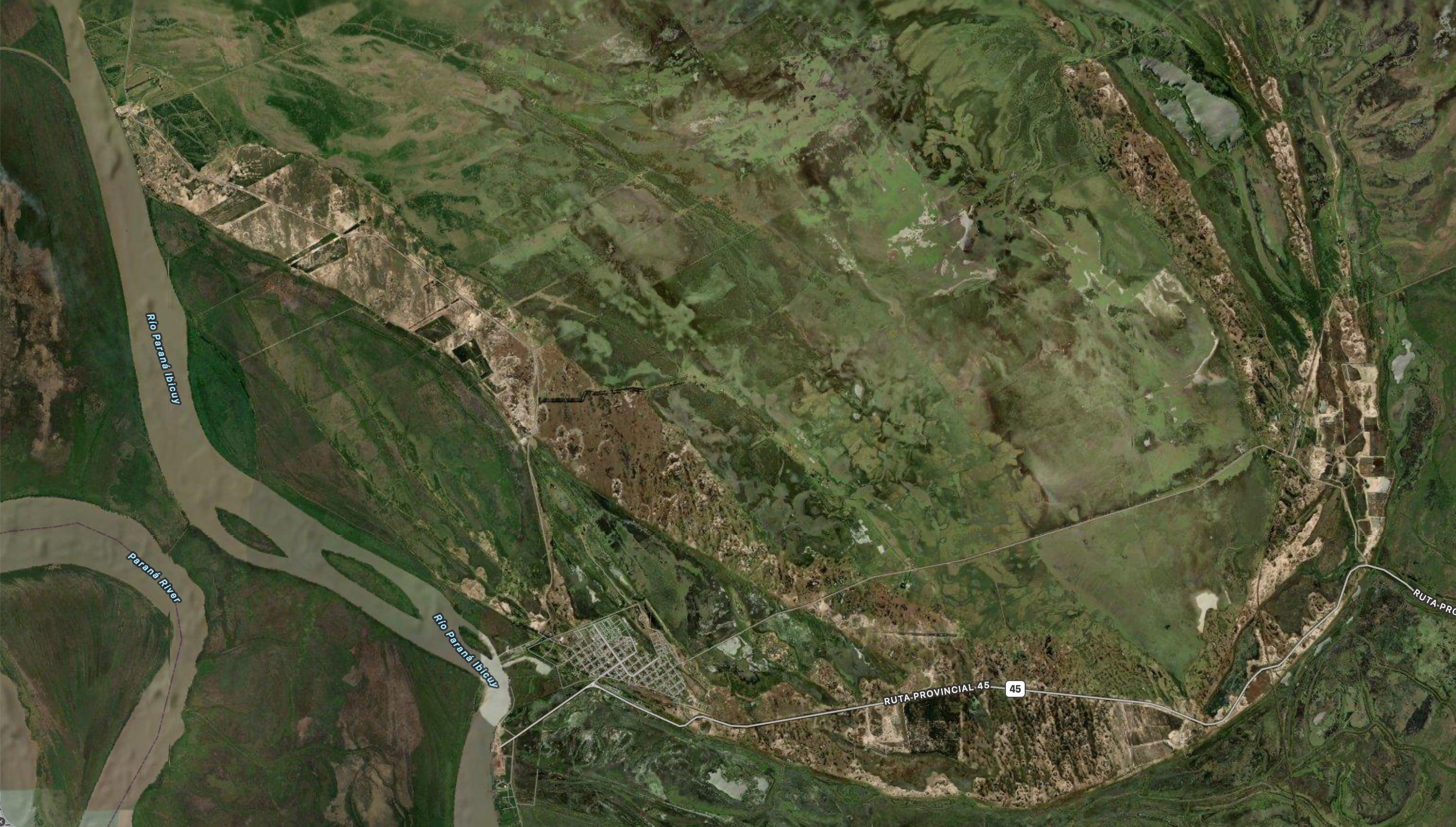
Entre Ríos itself banned hydraulic fracturing on its own land under provincial law in 2017. However, the province is still burdened with the environmental and legal weight of supplying the fracking sand that Vaca Muerta, on the other side of the country, requires.
a. The first proceeding: CAUCE v. Entre Ríos Province et al.
In October 2021, an environmental non-profit (CAUCE) and a local teacher’s union (AGMER) sued YPF’s El Mangrullo wash plant over the effects of the sand operation on the health of the local community and its resources.[7] YPF is Argentina’s state-owned oil company and the biggest player in Vaca Muerta. In the ruling, Entre Ríos’s appellate court told the provincial government to conduct a “cumulative environmental impact study” of the impacts of its sand quarries and wash plants on the surrounding environment, since no such combined assessment existed. The province did not comply with the judgement.
On April 2022, CAUCE petitioned the court, invoking the court’s continuing jurisdiction to secure compliance with its own 2021 judgment to enforce the order. On May 2022, the court favored CAUCE’s petition, escalating the local government’s unmet obligation into an outright freeze on permitting for any new sand quarry or wash plant authorization anywhere in the affected zone, a freeze upheld twice on appeal.
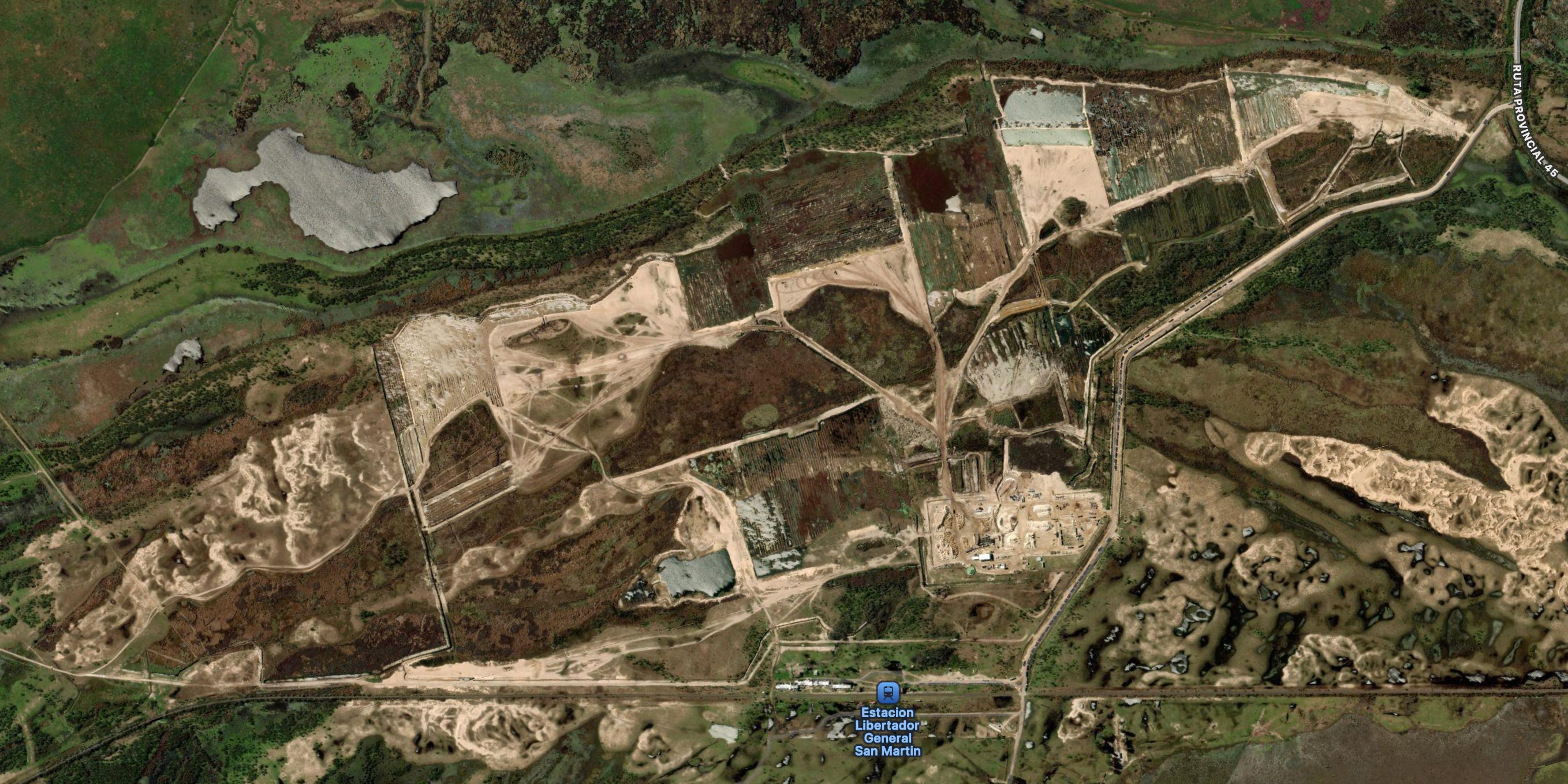
The first appeal by the government against the freeze over non-compliance was rejected, but YPF was afforded a renewal exemption for its permit to operate the wash plant and its “environmental aptitude certificates.” The freeze binds new authorizations only, and it does not apply to sand extraction permits already granted. Municipal records from Ibicuy—one of the towns at the center of the province’s sand industry—show renewal of Cristamine’s “La República” facility in May 2022, and of YPF’s “El Mangrullo” facility in October 2022. Cristamine’s permit was renewed again in May 2024, and YPF’s in October 2024.
b. The second proceeding: Ricardo Luciano v. Gov. Gustavo Bordet
A second, separate suit challenged whether the sand-extraction sector companies’ paperwork was in order at all.[8]Environmental lawyer Ricardo Luciano sued Entre Ríos’ then-Governor Gustavo Eduardo Bordet personally, seeking an “environmental injunction” relief. Luciano argued that the sand-extraction operations acted mostly in a “clandestine manner”, “without” or with “expired” permits, and “in violation” of the regulations established through “[local] public hearings and social participation.”[9]

On April 2022, the court ordered the Governor to review, within 45 days, the legal status and environmental certificates of every sand quarry and wash plant in two departments in Entre Ríos’ south.[10] The province appealed, arguing the injunction relief sought by Luciano was the wrong vehicle and that ordering the Governor to act intruded on his executive functions. The Superior Tribunal rejected the defense’s argument in May 2022, confirming the merits.
c. The third proceeding: Potable-Water Cooperative v. CORUFA et al.
A third proceeding challenged whether the sand-washing operations around Ibicuy department were safe for the town’s drinking water supply.[11] A potable-water cooperative in the Ibicuy department sued the provincial water regulator (CORUFA) and the provincial government together, arguing that wash plants draw heavily on the Isla Talavera aquifer and that no study had ever established what that extraction does to the water the town depends on.
In September 2022, the court agreed and ordered a hydrogeological study of the aquifer.[12] The province didn’t comply, and the court further established quarterly compliance reports from the provincial environment office. Only over a year after the original order, the province finally had a proposal for the research.[13] However, it still took until July 2025 for the province to finally hire Universidad Nacional del Litoral in neighboring Santa Fe, to start moving on the court’s order.
Oil Companies Are Vertically Integrating Themselves in the Sand-Extraction Operations in Entre Ríos
YPF and Tecpetrol, two Argentinian oil companies with major presence in Vaca Muerta, secured their own captive sand sources in Entre Ríos. YPF acquired its position in the sand extraction business before the freeze. Tecpetrol, controlled by Techint Group, acquired its position in Entre Ríos between 2023 and 2024.[14]
These positions in the sand trade may harden into a long-term advantage if the freeze persists and if it continues to grandfather only existing licenses in place. For other companies, building new capacity from scratch has been legally foreclosed for years now, so acquisition of an existing permit is the only remaining path to a captive source at all.[15]
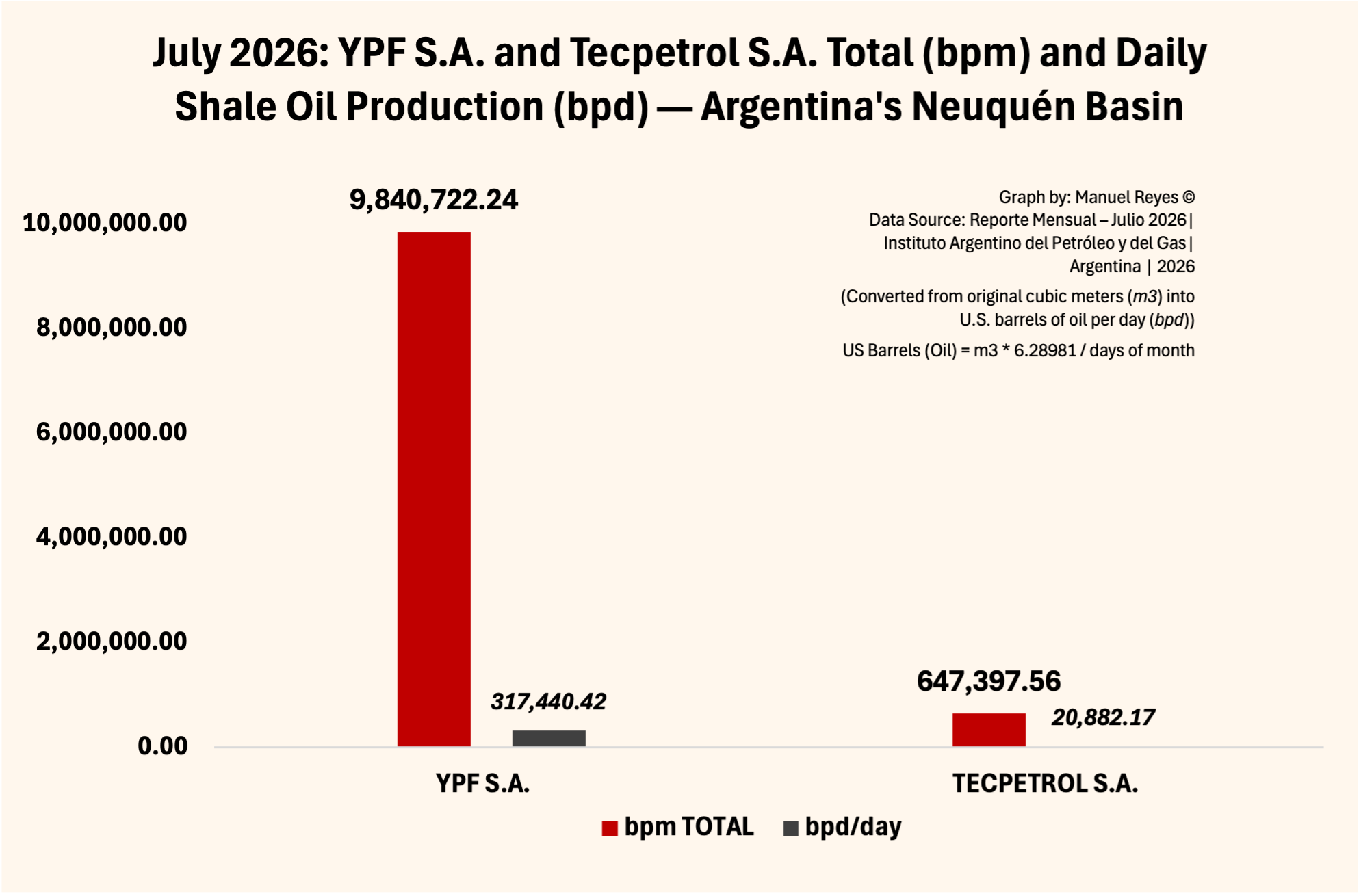
This is not to say that YPF and Tecpetrol have monopolistic powers over the sand trade. Rather, they may have an edge over any other company that cannot buy its way into the sand trade outright in a frozen market. Other oil companies in Vaca Muerta are buying from a smaller and non-expanding pool of suppliers at a time of constant growth in production, competing for allocation from YPF, Tecpetrol, Cristamine, and whoever else got in early or at all.
Federal Policy vs. Provincial Policy
Entre Ríos regulators and its judiciary are not picking winners and losers in the ordinary sense, nor are there particular rules for the benefit of specific actors in the Argentinian petroleum industry. Instead, the province’s failure to solve the environmental dispute over the often uncontrolled sand-extraction operations has created a years-long legal and administrative quagmire. In turn, that situation produced the same effect a deliberate policy would have: select companies are legally protected and administratively grandfathered into pre-existing sand extraction operations—through relatively favorable judgements and carveouts for permit renewals—while other entrants are barred. Thus, concentration under a handful of players is occurring by regulatory paralysis rather than by policy design. It just so happens that the resulting status quo has sorted itself out in favor of two of the biggest players in Vaca Muerta, both national oil companies, and one of them a state-owned one.[16]
However, Milei’s government has staked its credibility on deregulation and unrestricted competition, especially in the country’s energy sector. The administration has pledged that Vaca Muerta’s value relies on companies competing freely rather than on protected classes of investors. A years-long permitting freeze over a key shale oil input makes the central government’s free market stance incompatible with the legal and administrative realities on the ground. That is, Buenos Aires is heralding free-market competition across the land while a local government restriction sits astride the shale oil input that supports its flagship Vaca Muerta growth story.

In principle, YPF and Tecpetrol would have no obvious incentive to resolve the sand-extraction permitting freeze quickly. If Entre Ríos’s judiciary lifted the freeze tomorrow, YPF and Tecpetrol’s captive-source advantage would erode as new licensed capacity becomes available to their competitors. This creates a politically awkward situation where Buenos Aires’ pursuit of deregulation cannot at the same time call on federal powers to centralize decisions over a local resource. In fact, the federal government under Milei has championed local autonomy to push for controversial deregulation of the mining sector in glacial environments across the country.
Entre Ríos’s government presented the so-called “cumulative environmental impact study” in 2023, but the courts have not yet accepted its results as final. The findings continue to be challenged in court, with mixed results on the merits, but with a procedural timeline that remains active and unresolved.[17] That is, the original freeze on permitting for sand-extraction operations continues to date.[18] In the meantime, it is not clear whether the living conditions of the local populations enduring the sand-extraction operations have improved. The protracted lawfare has stopped the sand trade from expanding. However, it has not stopped companies with permits predating the freeze from continuing to operate under renewal exemptions.
Entre Ríos’ sand has ceased to be a mere procurement item and has instead become a variable of the declared resource. Today, Vaca Muerta’s growth demands a constant increment in the amounts of sand delivered. If the increment depends on Entre Ríos, and the province cannot authorize new extraction capacity, cannot guarantee the water to wash the sand, and its citizens are embroiled in a legal fight with the local authorities over the health and environmental effects of the sand trade, then the Argentinian shale oil sector might as well be looking at a reserves event that reassess oil recoverability downwards. Reserves, however, are what the hundred-million and the billion dollar investments, export pipelines and even futuristic data-centre proposals for Argentina are all underwritten against.
Recently, Ricardo Luciano discussed the matter of the sand extraction with an outlet specializing on environmental matters, encapsulating the issue in one sentence: “They’re taking away the south of the province in trucks.”
REFERENCES LIST
[1] In August 2026, Argentina published the most up to date re-evaluation of the Neuquen play’s resource base in roughly fifteen years. Covering up to December 2024 and concluded in July 2026, the study revised upward the technically recoverable shale oil resources at 30.17 billion barrels (Pmean), against the U.S. EIA 16.22 billion barrels estimation from 2013. The methodology used was a probabilistic volumetric analysis under PRMS 2018, the Petroleum Resources Management System jointly issued by SPE, WPC, AAPG, and SPEE, the global standard for classifying oil and gas resources. Argentina’s Energy Secretariat itself requested the study on October 27, 2025 in an official note (NO-2025-119399614-APN-SE#MEC) to the Argentinian Petroleum and Gas Institute (IAPG), with technical teams from the government and the private sector contributing data and participating directly. The result was formally certified by two universities, UBA and UNLP, acting as independent academic reviewers.
[2] Coverage on limits to Argentina’s shale industry is focused either on midstream challenges of pipeline access from the Vaca Muerta formation to the Atlantic coast, or on freight costs of carrying Entre Ríos’ sand to the wellheads.
[3] See generally Milton-Tayler D., Duenckel R., Hydraulic Fracturing: Fundamentals and Advancements. Edited by Jennifer L. Miskimins, ISBN 978-1-61399-904-2 (2019) (explaining the function of proppants in fracking).
[4] Cf. EconoJournal (@econojournal), “Cuando la presión baja, la arena de Río Negro se rompía y...”, Instagram (Mar. 2025), (YPF’s CEO Horacio Marín explaining that sand from Río Negro tends to crush under the shale’s closure pressure roughly a year into a well’s productive life, unlike Entre Ríos sand, which YPF found withstood that pressure over time).
[5] See generally Partearroyo M. F., Caracterización tecnológica de las arenas silíceas como insumo mineral en la industria hidrocarburífera: problemáticas y aprovechamiento para la reducción de costos. Evaluación de Proyecto para la instalación de un laboratorio de análisis y control de materias primas. (2019) (Trabajo Final de Especialización. Universidad de Buenos Aires. Facultad de Ciencias Exactas y Naturales) (describing the characteristics—including granulometry, sphericity, and roundness—and distribution of silica-sand deposits across Argentina, as well as their suitability as an input in the hydraulic fracturing process).
[6] If environmental permits for extraction are the only license available, then legally speaking, the permits act as the concessions themselves. A concession holder can break an environmental law, become compliant again, and resume activities, never losing the concession, because the concession and the compliance obligation are separate instruments. But where all an interest holder has is an environmental permit, and that permit gets suspended or is never issued, the holder can’t exploit the resource whatsoever: a freeze on permitting is not suspending compliance with a condition attached to an existing right. Rather, it is suspending the only instrument that constitutes the right to extract at all.
[7] The proceedings issuing the original ban can be found under “SNE - RESOLUCION CUMPLIMIENTO AMPARO (firma digital)”, “Autos: Nº 10480”, “Expte. Nº 25405”, “Paraná - AMPAROS STJ” dated May 27, 2022, on Entre Ríos’ Supreme Court records at https://mesavirtualpublica.jusentrerios.gov.ar/expedientes. The link was not included as an inline in the body of the text because the original URL contains a CAPTCHA/session token that exceeds the character limit allowed by the native hyperlink function.
[8] The original proceedings can be found under “LUCIANO, Ricardo José C/ SR. GOBERNADOR GUSTAVO EDUARDO BORDET S/ ACCION DE AMPARO (ACCIÓN DE EJECUCIÓN DE INCIDENCIA COLECTIVA)”, “Expte. Nº 25654”, “Gualeguaychú - Cámara de Apelaciones - Sala Laboral” dated May 5, 2022, on Entre Ríos’ Supreme Court records at https://mesavirtualpublica.jusentrerios.gov.ar/expedientes. The link was not included as an inline in the body of the text because the original URL contains a CAPTCHA/session token that exceeds the character limit allowed by the native hyperlink function.
[9] See supra note 8 for the same case name and identifiers on earlier decision on venue dated March 5, 2022. The Apellate Court first settled whether the case belonged in provincial court at all and whether the federal circuit was forum non conveniens. It confirmed so by applying Law 25.675’s own test for federal versus provincial competence: jurisdiction turns on whether the alleged harm actually crosses provincial lines, not on the general subject matter being “environmental.” The link was not included as an inline in the body of the text because the original URL contains a CAPTCHA/session token that exceeds the character limit allowed by the native hyperlink function.
[10] Id. on same case name and identifiers for decision dated April 11, 2022.
[11] The original proceedings can be found under “COOPERATIVA DE AGUA POTABLE Y OTROS SERVICIOS PUBLICOS DE IBICUY C/ CORUFA - GOBIERNO DE LA PROVINCIA DE ENTRE RIOS S/ ACCION DE AMPARO”, “Expte. Nº 25961”, “Gualeguaychú - Juzgado Civil y Comercial 2” (latest judgement dated January 10, 2024), on Entre Ríos’ Supreme Court records at https://mesavirtualpublica.jusentrerios.gov.ar/expedientes. The link was not included as an inline in the body of the text because the original URLcontains a CAPTCHA/session token that exceeds the character limit allowed by the native hyperlink function.
[12] Id. on same case name and identifiers for decision dated September 28, 2022.
[13] Id. on same case name and identifiers for Reolution issued on December 4, 2024.
[14] In its 2024 financial disclosures, Tecpetrol refers to an outstanding financial commitment of $0.9 million to Arenas Argentinas del Paraná S.A., corresponding to the final installment owed for the purchase of a “sand plant” in Entre Ríos province.
[15] See supra note 7 for same case name and identifiers but dated March 2, 2023 (discussing the legal impossibility to grant mining company Orosmayo, S.A. a permit to open up “two [new] sand quarries and one wash plant” insofar as “constituting” new sand-extraction capacities anywhere in the province of Entre Ríos is paralyzed, the province’s rationale arguing departmental and sub-jurisdictional limits “lacks reasonability” due to a standing wholesale injunction against “innovation”, as it is “well known” that the “object of the suspension of ‘all‘authorization procedures was subjectively directed at the Provincial State”).
[16] It should be noted as well that YPF’s current CEO Horacio Marín, was a long-time executive at Tecpetrol, before being tapped by the Milei administration to lead YPF.
[17] The original proceedings impugning the results of the study can be found under “LUCIANO RICARDO JOSE Y OTRO C/ BERNAUDO GUILLERMO, Ministerio de Desarrollo Económico, Provincia de Entre Ríos S/ ACCION DE EJECUCION (ART. Nº58, ACCIÓN DE PROHIBICIÓN ART. Nº59, CONSTITUCIÓN DE ENTRE RIOS)”, “Expte. Nº 26979”, “Expte. Nº 8310/C”, “Gualeguaychú - Cámara de Apelaciones - Sala Civil”, on Entre Ríos’ Supreme Court records at https://mesavirtualpublica.jusentrerios.gov.ar/expedientes. The link was not included as an inline in the body of the text because the original URL contains a CAPTCHA/session token that exceeds the character limit allowed by the native hyperlink function.
[18] Id. (discussing how all “challenges” to the study are still “being processed” by those “procedurally legitimated” to do so).
What to read next:

Argentina's “Super RIGI”: A Quick Guide to the Proposed New Investment Regime for Foreign Investors


See The Southern Trade on Google
Want The Southern Trade analysis at the top of your feed? You can tell Google to prioritize this source by clicking on the button below.


© 2026 Manuel Reyes, The Southern Trade Group™. All rights reserved. Content may not be reproduced without permission.